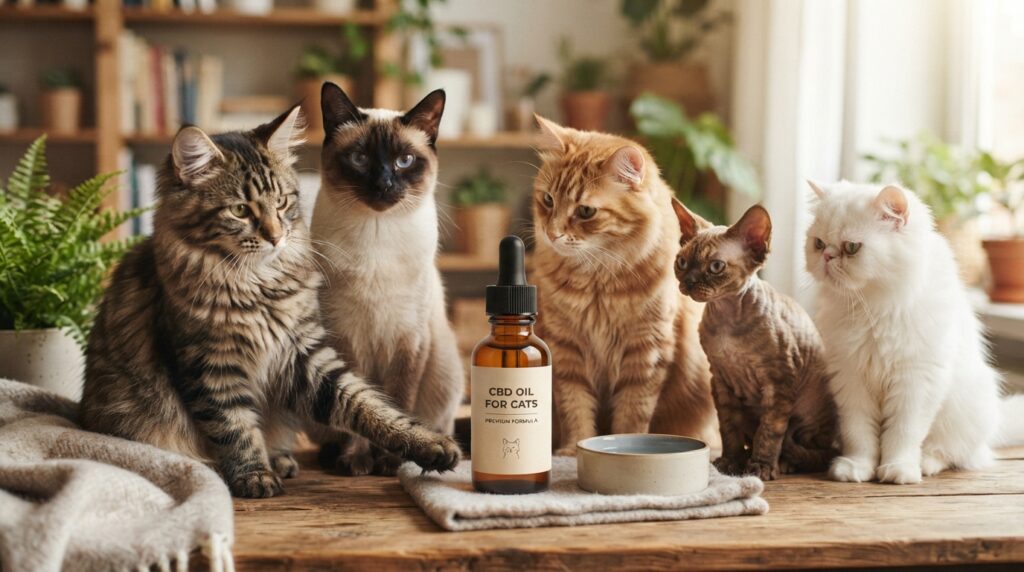
A shopper in one state can buy a bottle online, and a shopper in another may find the same product pulled from shelves. Rules around hemp have shifted more than once in the past decade, and another change is scheduled for this autumn.
Pet owners often assume that a product sold openly must be approved. It is a common assumption, and for CBD oil for cats it is incorrect. The regulatory picture has several layers, each with its own agency and its own limits.
The sections below sketch the federal rules, the upcoming change to the hemp definition, and what labels can and cannot say. Laws move quickly, so any decision should be checked against current sources.
The Federal Rules in Plain Terms
What the 2018 Farm Bill Did
The 2018 Farm Bill removed hemp, defined as cannabis with no more than 0.3 percent delta-9 THC on a dry weight basis, from the Controlled Substances Act. That opened the door to hemp-derived products, including CBD. The law kept the FDA’s authority over foods, drugs, and supplements in place.
The USDA later issued a final rule governing hemp production, which took effect in 2021.
The Change Set for November 12, 2026
A 2025 appropriations law (P.L. 119-37) rewrote the hemp definition, with the new language effective on November 12, 2026. Under the revised text, the 0.3 percent limit applies to total THC, and final hemp-derived cannabinoid products containing more than 0.4 mg of total THC and similar cannabinoids per container fall outside the definition. Excluded products would be treated as marijuana under federal law.
Industry groups say many full-spectrum CBD products could exceed that cap. Proposals to delay or change the rules have been introduced in Congress, and one state tax agency bulletin from October 2026 refers to a federal enforcement delay scheduled for December 11, 2026. Status can change quickly, so a check of current news is worth doing before buying.
FDA’s Position on Animal Products
No CBD product is approved by the FDA for use in animals. The agency’s Center for Veterinary Medicine has said it cannot confirm that these products are safe. In January 2023 the FDA stated that existing regulatory pathways for foods and supplements were not appropriate for CBD and that it would work with Congress on a new approach.
For pet owners, the practical message is simple: legal to sell does not mean reviewed for safety.
Who Handles What
| Body | Role |
|---|---|
| FDA Center for Veterinary Medicine | Animal drugs, pet foods, and related labeling |
| USDA | Hemp cultivation rules |
| DEA and the Controlled Substances Act | Federal status of marijuana and related products |
| FTC | Advertising claims |
| State agriculture and feed officials | Pet food and supplement rules within a state |
| AAFCO | Model feed guidelines that states may adopt, not a regulator |
Labels and Claims
Supplement, Food, or Drug
The words on a label affect how regulators view the product. Claims that a product treats, cures, or prevents a disease can classify it as an unapproved animal drug. AAFCO has not approved CBD as a pet food ingredient, which leaves many products in a gray zone.
That explains why many labels use soft language such as supports calm or promotes comfort, though even that wording can attract attention.
What a Pet Supplement Label Usually Lists
- Product name and the species it is intended for
- Net quantity
- Ingredients, often in descending order by weight
- Directions for use
- Name and address of the manufacturer or distributor
- Lot or batch number
A missing manufacturer address or lot number is a reason to ask questions.
Claims That Draw Warning Letters
The FDA has issued warning letters to companies marketing CBD products for animals with disease claims, and the FDA and FTC have sent joint letters over unsupported health claims. Language about curing cancer, treating seizures, or replacing prescribed medication appears often in those cases.
A product page that makes such claims says something about the company’s attention to the rules.
What the Rules Mean for Shoppers
Check State and Local Law
States handle hemp products differently, and some have moved faster than Washington to restrict certain hemp-derived items. A product available in one state may not be sold in another.
State agriculture department websites usually list current rules.
Shipping and Travel
Buying online and shipping across state lines adds another layer, especially while definitions change. Rules outside the United States vary widely and are often stricter, so travelers should check regulations at the destination before packing a bottle.
Carrying the lab report and a vet’s note can help if questions arise.
A Short Checklist
- Confirm the product’s THC level on a recent lab report
- Check current federal and state rules close to the purchase date
- Ignore any claim of FDA approval for pets
- Keep receipts, batch numbers, and vet notes
- Report problems to the manufacturer and the FDA
The list takes a few minutes and covers most of the risk.
Final Thoughts
CBD oil for cats operates in a legal space that is still being defined. No product has FDA approval for animals, and the hemp definition is due to change on November 12, 2026. Labels should be read for what they omit as well as what they claim. Current rules and a veterinarian’s input should guide any purchase.